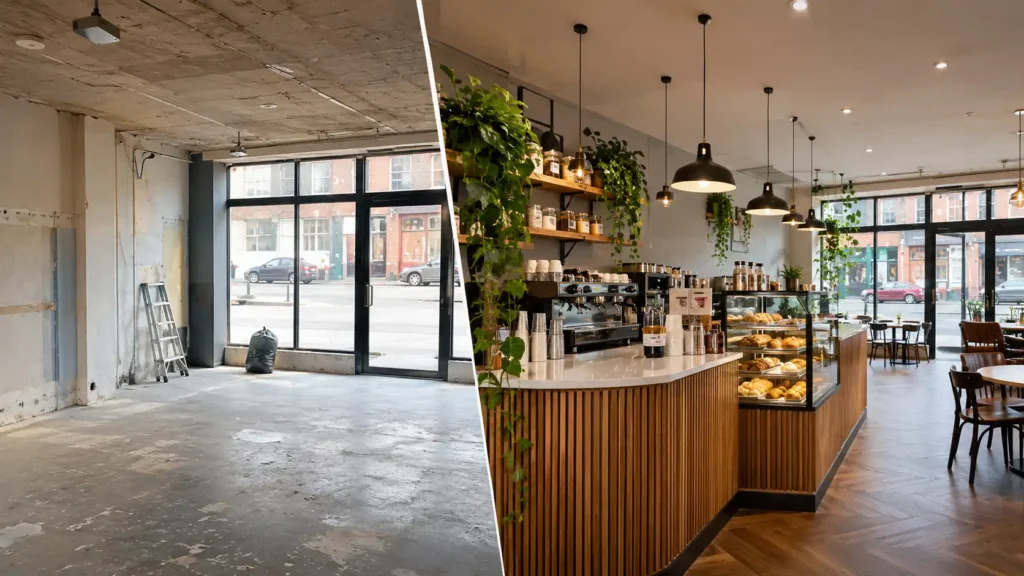
However, transforming an empty retail unit, office or other commercial premises into a fully operational coffee shop requires careful financial planning. From renovation and electrical installations to coffee machines, furniture and regulatory compliance, several expenses can influence the overall investment.
In 2026, converting a commercial property into a coffee shop in the UK can cost approximately £20,000 to £100,000 for a typical fit-out, although complex conversions and premium London locations can cost considerably more. This estimate does not necessarily include rent deposits, substantial structural alterations or operating reserves.
Understanding these costs before signing a commercial lease can help business owners avoid unexpected expenses and develop a realistic opening budget.
How Much Does a Commercial Property Conversion Cost in the UK?
The overall conversion cost depends on the property’s size, existing condition, location and the type of coffee shop being developed.
A former café with suitable plumbing, electrical systems and customer facilities will generally be cheaper to convert than an empty office or retail unit requiring extensive modifications.
For example, a small takeaway-focused coffee shop may require limited seating and a compact preparation area. A larger café offering freshly prepared meals will need additional kitchen equipment, ventilation and storage.
The following table provides illustrative planning allowances for a modest independent coffee shop.
| Conversion Expense | Estimated Cost |
|---|---|
| Initial building repairs and renovation | £5,000–£20,000 |
| Electrical and plumbing installations | £5,000–£15,000 |
| Coffee machines and equipment | £3,000–£15,000 |
| Counter and kitchen preparation area | £3,000–£12,000 |
| Furniture and interior decoration | £2,000–£10,000 |
| Signage and branding | £500–£3,000 |
| Professional fees and compliance preparation | £1,000–£5,000 |
| Illustrative subtotal | £19,500–£80,000 |
These are budgeting allowances rather than guaranteed contractor quotations. The subtotal excludes VAT, rent deposits, opening stock and contingency, while major extraction or structural work may increase the total.
What Renovation Work Is Required to Turn a Commercial Unit Into a Coffee Shop?
Before opening a coffee shop, the commercial property must be adapted to accommodate food preparation, customer seating and daily business operations.
Structural Repairs and Interior Modifications
Older commercial properties may require repairs to walls, ceilings, floors or internal partitions.
Depending on the existing layout, owners might need to create a preparation area, improve customer access or install suitable toilet facilities.
A property requiring substantial structural alterations can quickly become more expensive than one already configured for hospitality use.
Electrical and Plumbing Installations
Coffee shops rely heavily on reliable electricity and water supplies.
Commercial espresso machines, refrigeration units, dishwashers and lighting systems may require additional electrical capacity.
Plumbing work may involve installing sinks, drainage systems, water filtration equipment and hot-water supplies.
Before beginning renovations, a qualified contractor should inspect the property’s existing infrastructure to identify potential upgrades.
Ventilation and Kitchen Facilities
A coffee shop serving drinks and pre-prepared pastries may have relatively simple ventilation requirements.
However, businesses preparing hot meals or undertaking grease-producing cooking may need specialist extraction equipment.
Ventilation systems, external ductwork and associated permissions can add thousands of pounds to the conversion budget.
How Much Does Coffee Shop Equipment Cost?
Equipment represents another significant investment when converting a commercial property.
A professional coffee machine is essential for maintaining consistent drink quality, particularly during busy trading periods.
Other important purchases include coffee grinders, refrigeration units, display cabinets, dishwashers, preparation counters and payment systems.
According to Checkatrade’s coffee shop fit-out cost guide, commercial coffee machines can vary considerably in price, with higher-capacity professional systems costing substantially more than basic models.
Entrepreneurs can reduce initial expenditure by purchasing refurbished equipment or leasing certain machines. However, maintenance contracts, warranties and energy consumption should be considered before choosing cheaper alternatives.
Investing in dependable equipment can help prevent costly interruptions once the café begins trading.
Is Converting an Existing Property Cheaper Than Opening a Coffee Shop Franchise?
Many entrepreneurs compare independent coffee shop conversions with opening a branded coffee business.
An independent café provides greater flexibility over its menu, interior design, suppliers and branding. However, the owner must develop the business identity and attract customers without relying on an established national brand.
A franchise or licensed branded operation may offer operating systems, training and marketing support, but additional commercial agreements and investment requirements can apply.
For entrepreneurs researching branded coffee businesses, understanding how much does it cost to open a starbucks can provide useful context when comparing different business models.
Importantly, Starbucks does not generally offer conventional individual franchise opportunities in the UK, so investors should distinguish between franchising and licensing arrangements.
Ultimately, the most suitable option depends on the entrepreneur’s available capital, experience and long-term business objectives.
Do You Need Planning Permission to Convert a Commercial Property Into a Coffee Shop?
Planning permission is an important consideration before beginning a commercial property conversion.
In England, shops and cafés generally fall within Use Class E, meaning changing an existing Class E retail unit into a café will not normally require planning permission for the change of use itself.
However, converting certain other premises, creating a predominantly hot-food takeaway or undertaking external alterations may require planning approval.
According to the Planning Portal’s guidance on converting shops into cafés, associated building works, extractor flues and outdoor seating can require separate permissions or licences.
What Other Legal Requirements Should Coffee Shop Owners Consider?
Before opening, operators should review building regulations, fire safety, accessibility, food hygiene and any relevant licensing requirements.
Food businesses must register with their local authority at least 28 days before trading. Registration is free.
The UK Government’s food business guidance explains the registration process and responsibilities relating to food safety and allergen information.
Planning and licensing rules can differ across England, Scotland, Wales and Northern Ireland, making local authority checks essential.
What Additional Costs Should Coffee Shop Owners Budget For?
Renovation and equipment costs represent only part of the overall investment.
Commercial property tenants may also need to pay rent deposits, legal fees, insurance, utility connection charges and business rates.
Staff recruitment, training, initial ingredients, packaging and promotional activities create additional expenses before the first customer arrives.
New businesses should also maintain sufficient working capital to cover their early operating costs.
For example, an independent coffee shop with monthly fixed expenses of £6,000 would need approximately £18,000 to cover three months of those costs, excluding variable expenses.
A contingency allowance of around 10–15% of the construction and fit-out budget can also help accommodate unexpected building repairs or installation problems.
How Can Entrepreneurs Reduce Coffee Shop Conversion Costs?
Reducing unnecessary expenditure can make a commercial property conversion more financially manageable.
One of the most effective approaches is choosing premises that already contain suitable plumbing, electricity, drainage and customer facilities.
A former café or food-service unit may offer considerable savings compared with converting a completely empty commercial property.
Business owners should also obtain several detailed contractor quotations, compare equipment purchasing options and prioritise essential installations over expensive decorative features.
For entrepreneurs researching broader commercial opportunities, A Rush provides an additional starting point for exploring business-related content and information.
Careful budgeting should never come at the expense of food safety, accessibility or essential building compliance.
How Long Does It Take to Convert a Commercial Property Into a Coffee Shop?
The conversion timeline depends on the property’s condition, the complexity of the work and whether planning approval is necessary.
A straightforward refurbishment of an existing café may take approximately four to eight weeks once contractors and materials are available.
A more substantial conversion involving electrical upgrades, plumbing, internal alterations and specialist installations could take two to four months or longer.
Planning applications, landlord approvals, equipment deliveries and unexpected building defects may extend the schedule.
Entrepreneurs should therefore avoid committing to an opening date until the main regulatory and construction requirements have been assessed.
Is Converting a Commercial Property Into a Coffee Shop Worth the Investment?
A successful conversion can create a valuable long-term business, particularly in locations with consistent pedestrian activity and suitable customer demand.
However, profitability depends on more than renovation costs.
Rent, staffing, ingredient prices, competition and average customer spending all influence financial performance.
For example, a coffee shop serving 100 customers daily with an average transaction value of £5 would generate approximately £500 in daily sales, or £15,000 over a 30-day trading period.
This represents revenue rather than profit. Operating expenses, taxes and other business costs must still be deducted.
Before investing, entrepreneurs should research local competitors, estimate realistic customer numbers and calculate the sales required to cover their monthly expenses.
Conclusion
Converting a commercial property into a coffee shop in the UK requires substantial planning, but the investment can be manageable with the right premises and business strategy.
Although a typical fit-out may cost £20,000 to £100,000, more extensive conversions can exceed this range, particularly where major building work or premium finishes are required.
Choosing a suitable property, understanding legal requirements, comparing contractor quotations and maintaining adequate working capital can help reduce financial risks.
Ultimately, a successful coffee shop conversion combines sensible property investment with a clear understanding of customer demand and long-term operating costs.
Frequently Asked Questions
Can You Convert Any Commercial Property Into a Coffee Shop?
Not automatically. The property’s planning use, lease restrictions, building condition and regulatory requirements must be checked first.
How Much Does a Small Coffee Shop Conversion Cost?
A modest conversion may cost around £20,000–£50,000, while extensive building work and equipment requirements can increase the investment.
Do Coffee Shops Need Planning Permission in the UK?
Not always. In England, converting a Class E shop into a café generally does not require change-of-use permission, although other approvals may apply.
How Much Money Should You Keep Aside Before Opening?
Ideally, maintain three to six months of operating expenses alongside a separate contingency for unexpected conversion costs.
Is It Cheaper to Convert an Existing Café?
Usually, yes. Existing plumbing, electrical installations, counters and customer facilities can reduce renovation expenditure significantly.


More Stories
What Makes Casino Bonus Offers Profitable For Operators?
How Can Strategic Business Content Strengthen Online Authority for UK Companies?
What Makes Coyyn the Best Platform for You?